
I got to go hiking with friends for the first time in a couple of months again this Sunday – this time to a series of lakes an hour and a half drive north east of Seattle. The drive there was miserable – I gave myself a headache from staring at my phone, and forgetting to eat breakfast left me a nausea that lasted all 90 minutes there. It was a relief to get out of the car, but I dreaded the return trip – I was not especially accustomed to long car rides.
The trail itself was curiously divided into three distinct parts – two flat and one not-so-flat. Almost 1500 ft of elevation within a mile and a half – huffing and puffing indeed, just as the WTA website promised. It was this that really made the experience. I was out of shape: hell, I was already sweating during the few miles of flat trail, so it was a whole other beast to start the ascent. I pushed myself to that point you get to when you haven’t run in a while – that migraine that sits in your temples and behind your eyes that is somehow purifying, cleansing the mental fog of inactivity. I admit I had to stop a couple of times to break for water, but by the 33rd (36th? 40th?) switchback I was done with the hard part, according to the friendly couple on their way back down. I must have been quite the sight – absolutely drenched in sweat, my oft-questioned choice of yellow-green workout shirt sticking to every unflattering angle; a black school backpack covered in dirt from the breaks; a giant liter-large plastic bottle of Kirkland Signature water excavated from my parent’s basement half a year ago to achieve its final destiny of replacing what was lost in only an hour of the hike.
I was happy though. In that one moment, after most of an hour thinking of nothing but the next switchback turn after turn, the satisfaction of reaching the top was incredible. It was the happiest I had been in weeks, I think. Then just another few minutes to the first lake viewpoint, and I sat down on a rock jutting into the side and let every muscle in my body relax, and I just was. No self-deprecation or regret or irritation. I just was.
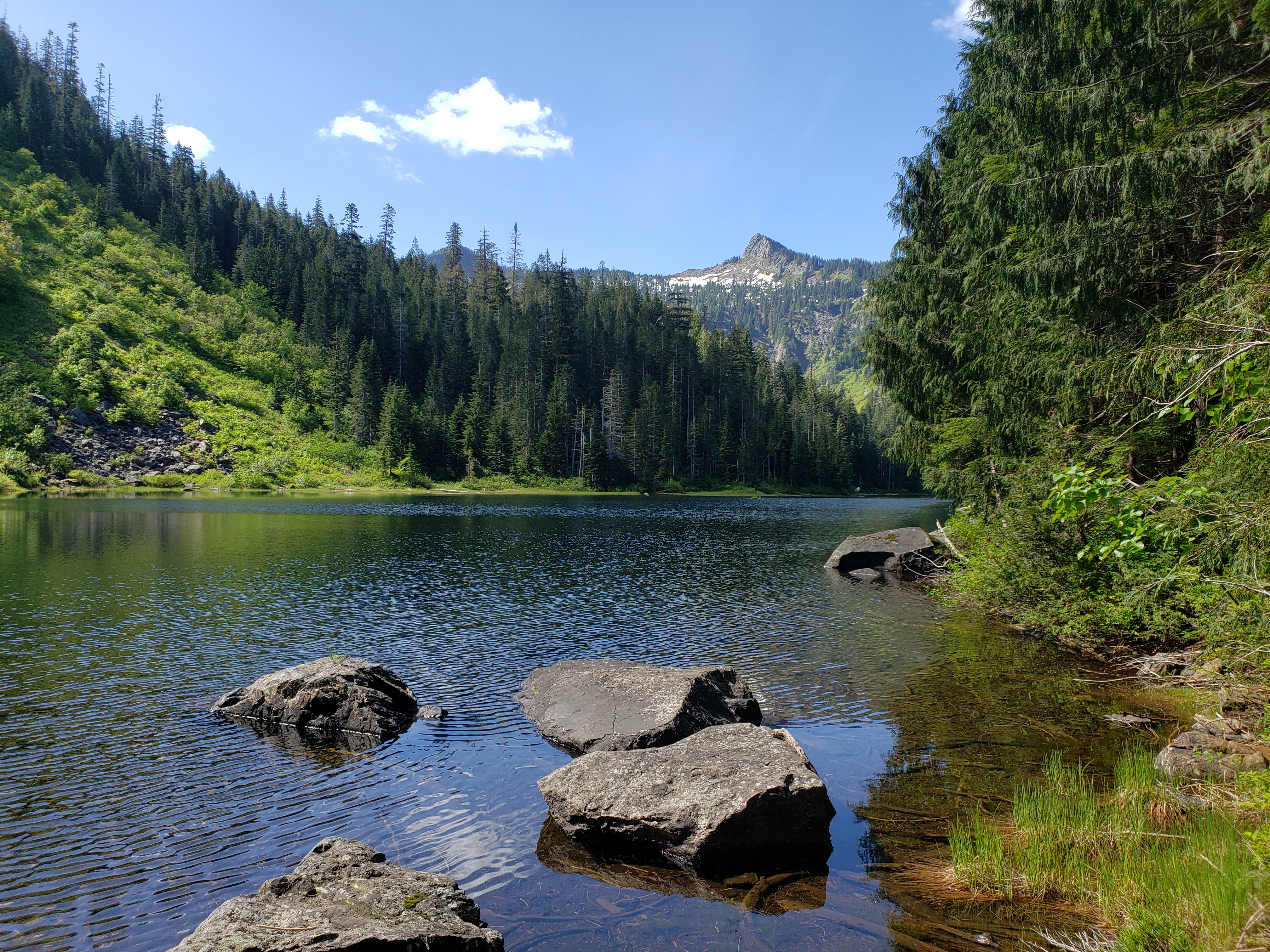
It was good. It was so, so good.
Eventually my friend caught up to me and we ventured off to find the trailblazer of the group that shot up the mountain in record time. We rendezvoused at the final lake view and ate.
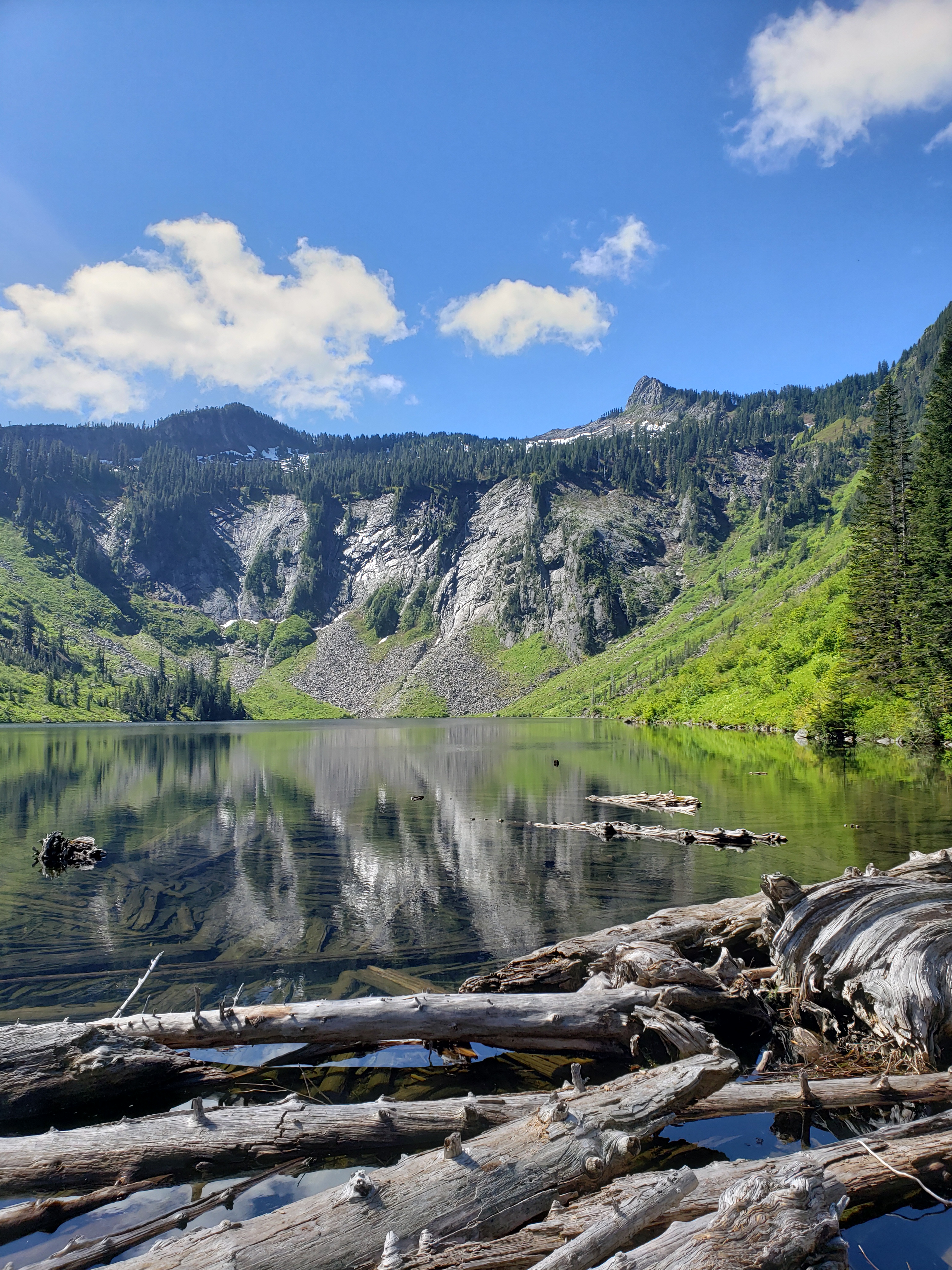
Perfect time for Cliff bars and banter. A butterfly even landed on my friend’s head. A dog came over from a few feet away explicitly to shake itself dry on my shoes. An older hiker asked if there was any real trail left – there wasn’t, although it was supposedly possible to scramble up the three peaks, the third more to the left behind us.
I don’t know if I can describe why I had so much fun. Maybe it was because I had spent the past few weeks inside, and the change of pace made all the difference. I certainly needed the exercise, and the associated endorphin rush that follows a good workout. But also, the view. The smell. The sounds of birds chirping and flies buzzing and friends talking. The silence of my own mind.
To be overly analytical, there is a theory that plant biodiversity has some sort of impact on mental health. There must be something to complexity, and, conversely, simplicity. Much of art is supposed to be representations of patterns found in nature, after all, and then of course this is subverted by intentional simplicity. Same way realism gets subverted into the abstract. But the best way I can put it is as texture. In a landscape it can, to a degree, be pleasing to have stuff that draws the eye, as long as crowding is avoided. The layers too – contrast between the lake and the trees and the distant peaks.
Something so good can only last so long – the high was pretty much over by the time I made it back to my apartment. The drive back wasn’t so bad though. I got a chance to just stare out the window and day dream, like I used to on day trips with my parents as a kid. It was good while it lasted, and I want to do it again. I think that perhaps the secret it is finding things that make you happy like this and doing them consistently. Maybe then perspective on life will change a little bit for the better. But get back to me once I’ve made it.
 The Scenic Climax